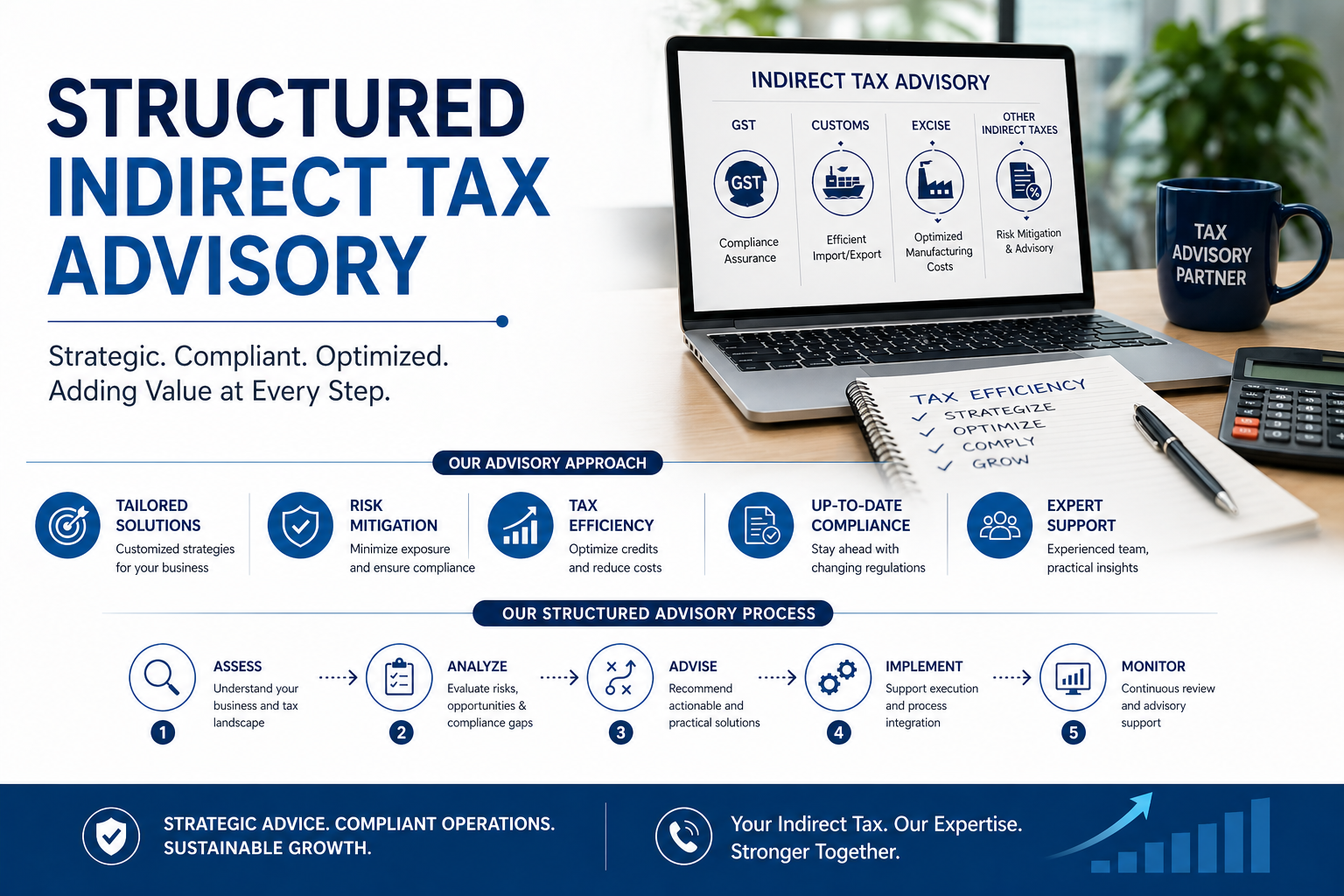
Indirect taxation in India operates within a tightly regulated framework where compliance accuracy directly influences financial stability and operational continuity. Businesses must align their reporting, documentation, and filings with evolving GST norms while maintaining consistency across transactions. This requires a disciplined approach supported by technical expertise and procedural clarity.
Organizations seeking indirect taxes service in Pune often require more than routine compliance support. They need structured advisory, accurate filings, and representation capabilities that align with statutory expectations. A professional framework ensures that tax obligations are handled systematically without disrupting core business functions.
GST Compliance and Filing Framework
GST compliance forms the backbone of indirect taxation, covering registration, return filing, and reconciliation processes. Businesses must ensure that all outward and inward supplies are accurately reported within prescribed timelines. Even minor inconsistencies can lead to mismatches and compliance risks.
Accurate filing requires coordination between accounting records and GST returns, ensuring that reported figures reflect actual transactions. Regular monitoring and validation reduce the chances of errors, enabling smoother compliance cycles and minimizing exposure to penalties.
Input Tax Credit Optimization and Reconciliation
Input tax credit remains a critical element in managing tax liabilities effectively. Businesses must reconcile purchase data with supplier filings to ensure eligibility and avoid credit blockages. This process requires consistent tracking and validation of invoices.
Proper reconciliation ensures that credits are utilized efficiently while maintaining compliance with regulatory requirements. Structured handling of input tax credit prevents financial leakages and supports better cash flow management within the organization.
Advisory on GST Implications and Structuring
Advisory services focus on evaluating transaction structures and identifying tax implications across business operations. This includes analyzing supply chains, pricing strategies, and contractual arrangements to ensure compliance with GST provisions. Strategic planning helps minimize inefficiencies without violating regulations.
Organizations benefit from understanding how tax rules apply to different business models and transactions. Advisory support ensures that decisions are aligned with compliance requirements, reducing the likelihood of disputes or adjustments during assessments.
Representation and Handling of Tax Authorities
Interactions with tax authorities require precise documentation and timely responses. Businesses may face notices, assessments, or inquiries that demand structured representation. Professional handling ensures that submissions are accurate and aligned with regulatory expectations.
Effective representation reduces the risk of escalation and ensures that issues are resolved efficiently. Proper documentation and communication play a crucial role in maintaining compliance and avoiding prolonged disputes.
Core Components of Indirect Tax Services
Indirect tax functions involve multiple interconnected activities that support compliance and advisory requirements. These services are designed to address both routine and complex scenarios.
- GST registration and amendments based on business needs
- Periodic return filing and compliance tracking
- Input tax credit reconciliation and validation
- Representation during assessments and inquiries
Each component contributes to maintaining a stable compliance framework, ensuring that businesses meet regulatory obligations consistently.
Audit and Compliance Review Processes
Audit mechanisms help identify discrepancies between financial records and tax filings. Regular reviews enable businesses to detect errors early and implement corrective measures before issues escalate. This proactive approach strengthens compliance systems.
Compliance reviews also evaluate internal processes, ensuring that documentation and reporting align with statutory requirements. Businesses that conduct periodic assessments are better prepared for scrutiny and regulatory checks.
Documentation and Record Maintenance
Accurate documentation is fundamental to indirect tax compliance. Businesses must maintain detailed records of invoices, returns, and supporting documents to substantiate their filings. Proper record-keeping ensures transparency and facilitates smooth audits.
Maintaining organized records also helps in responding to notices and inquiries efficiently. A structured documentation system reduces the risk of errors and supports consistent compliance across reporting periods.
Managing Notices and Litigation Support
Handling tax notices requires a clear understanding of regulatory provisions and procedural requirements. Businesses must respond within specified timelines, providing accurate documentation and explanations. Professional support ensures that responses are structured and compliant.
Litigation support involves representing businesses during disputes and ensuring that cases are handled with technical precision. Effective management of such situations minimizes financial exposure and operational disruptions.
Industry-Specific Applications of Indirect Taxation
Different sectors experience unique challenges based on their operational models and transaction structures. Manufacturing units must manage input credits and multi-location compliance, while service providers deal with place-of-supply rules and valuation aspects. Each industry requires tailored compliance strategies.
Retail and trading businesses face high transaction volumes, making reconciliation and reporting more complex. Sector-specific expertise ensures that these challenges are addressed effectively, maintaining consistency across compliance processes.
GST Compliance for Trading Businesses
Trading entities must handle large volumes of transactions across multiple suppliers and customers. Accurate reporting and reconciliation are essential to maintain compliance. Structured processes help manage these complexities efficiently.
Service Sector Tax Considerations
Service providers must determine applicable tax rates and place-of-supply rules accurately. Errors in these areas can lead to compliance issues. Professional oversight ensures correct reporting and documentation.
Manufacturing Sector Compliance Needs
Manufacturers deal with input tax credits, production cycles, and supply chain complexities. Proper classification and documentation are critical. Efficient compliance systems support smooth operations.
Multi-State Operations and GST
Businesses operating across states must manage multiple registrations and compliance requirements. Coordinating filings across jurisdictions requires precision. A structured approach ensures consistency.
Documentation for High-Volume Transactions
High transaction volumes demand organized record-keeping systems. Businesses must maintain accuracy in reporting and reconciliation. Proper documentation supports compliance and audit readiness.
Handling Input Credit Disputes
Disputes related to input tax credit require detailed analysis and documentation. Businesses must justify claims with proper records. Professional assistance ensures accurate resolution.
Timely Filing and Compliance Tracking
Meeting filing deadlines is essential to avoid penalties and disruptions. Continuous monitoring ensures that compliance remains on track. Structured systems help maintain consistency.
Responding to Regulatory Changes
Regulatory updates require businesses to adapt their processes regularly. Staying informed ensures that compliance aligns with current laws. Proactive adjustments minimize risks.
Final Thoughts
Is indirect tax compliance merely a statutory obligation, or does it shape the financial discipline of a business over time? Organizations that approach taxation with structure and expertise often achieve greater operational stability and clarity. Sachin Gujar & Associates integrates compliance, advisory, and representation into a cohesive framework that supports business continuity and regulatory alignment. Their approach to delivering indirect tax services reflects a balanced focus on precision and practicality, placing them among the top CA firms in India for businesses seeking dependable financial and tax advisory support.